Mobile Hardware Demystified: Your Practical Guide to Security and Safety

Over four decades in mobile hardware and security, passionate about tech evolution and user safety. Bursa based. I make tech accessible to everyone.
Let’s make sense of this together. If you’ve ever wondered what’s really inside your phone—and more importantly, how to keep it secure—you’re in the right place. Mobile hardware is the beating heart of our digital lives, making daily routines smoother and, at times, more vulnerable. In my years of tinkering with gadgets and helping friends dodge security pitfalls, I’ve seen this change firsthand. Let’s dig in and turn mobile hardware from mystery to your ally in device protection and mobile security.
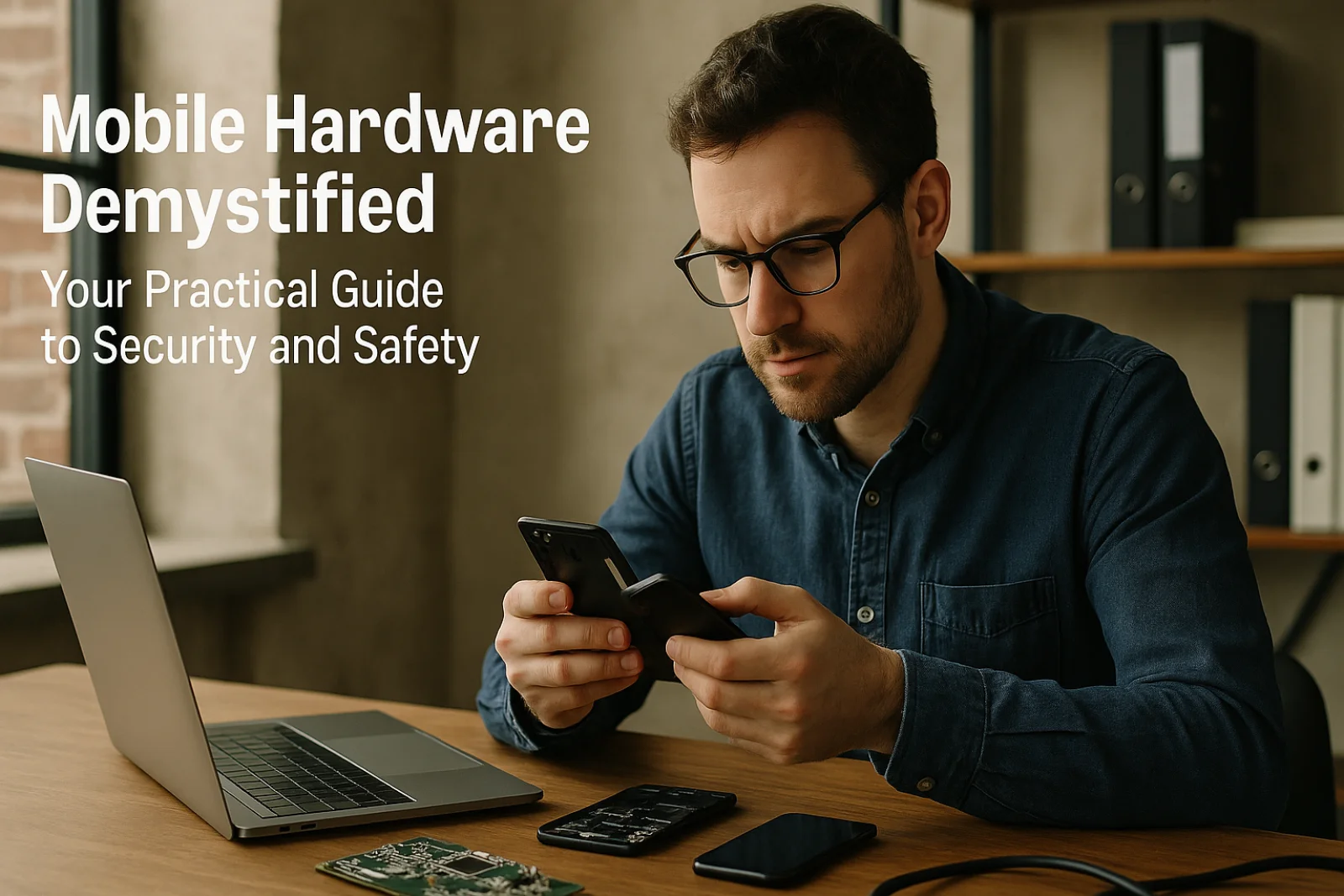
What Is Mobile Hardware, Really?
When we talk about mobile hardware, we mean everything inside your phone or tablet that you can physically touch—chips, memory, screen, camera, fingerprint sensor, and more. While software—the apps and operating system—gets all the glory, it’s the hardware that keeps things humming. Think of hardware as the body and software as the brain. If the body’s weak or compromised, the brain can’t help much!
Key Components to Know:
Processor (CPU): Like your phone’s main muscle, handling everything from texting to gaming.
RAM: Your device’s short-term memory—more RAM means smoother multitasking.
Storage: Where your photos, apps, and secrets live.
Screen & Touch Sensor: Your window and gateway to everything else.
Security Chips: Specialized hardware for encrypting your data and keeping bad guys out.
Why Hardware Matters for Mobile Security
Here’s what really matters for you: good hardware isn’t just about speed or pretty photos. It’s about security. Modern devices use dedicated security hardware—like Apple’s Secure Enclave or Android’s Trusted Execution Environment—to lock up your secrets (think fingerprints, PINs, and encryption keys).
Your security is worth the effort. If hardware is outdated or poorly made, even the best software can’t protect you. It’s like locking your door with a spaghetti noodle. That’s why regular device updates and sticking to trusted brands goes a long way for device protection.
[Read more about mobile security best practices](../mobile-security-best-practices)
App Store Safety: Where Hardware and Software Meet
Most threats sneak in through apps—not hardware flaws. But here’s the catch: a strong, secure device can help prevent malware from doing real harm. Both [Android and iOS app stores](../app-stores-safe-download) do their best to screen out bad apps, but nothing is foolproof.
Stay Safe by:
Downloading only from official stores ([Google Play](../android-app-store) or [Apple App Store](../ios-app-store))
Checking app permissions and reviews before installing
Keeping your device updated—hardware works best with the latest software patches
Got a minute? Take a [quick safety checklist](../device-security-checklist) to make sure your habits are up to speed.
Device Encryption: Your Invisible Bodyguard
Encryption sounds fancy, but it’s simply scrambling your data so only you (or someone with your PIN/password) can read it. Most modern hardware supports encryption out of the box, turning your phone into a digital vault.
To enable encryption:
Go to your device’s settings
Look for security or lock screen options
Set a strong PIN, password, or biometrics
And remember: if your device is lost or stolen, encryption keeps your data safe until you recover or wipe it.
Everyday Actions for Device Protection
Tech shouldn’t be overwhelming. Just a few small habits go a long way:
Use strong, unique PINs or passwords
Update your phone and apps regularly
Download apps only from official stores
Don’t ignore security warnings—if something feels off, it probably is
Consult a [certified professional](../mobile-device-services) if your device acts strangely or you suspect a compromise
In the Real World: My Experience
I’ve seen devices saved—and lost—based on these simple actions. A friend once ignored an update on her aging phone; a sneaky app drained her battery and mined data for weeks. If she had updated, her security chip would’ve blocked the malware. Lesson learned: small steps add up!
Conclusion: Make Mobile Hardware Work for You
Mobile hardware isn’t just a specs sheet—it’s your first and last line of defense for device protection. By understanding the basics, practicing good habits, and staying alert, you’re putting yourself ahead of most risks out there.
Remember, security advice evolves as technology changes. Stay curious, stay safe, and don’t hesitate to seek help if you’re unsure. Your digital life is worth protecting, and you’ve got this!
Loading…